Moving medicine and science forward

Liver transplants offer new hope for late-stage colorectal cancer
We have taken care of cancer patients with a very short life expectancy and seen them return to a full life after liver transplantation. For many stage 4 colorectal cancer patients who meet the criteria for a liver transplant, it can dramatically extend survival and restore quality of life in ways that haven’t been possible until recently.
— William C. Chapman, MD

Proven childhood obesity treatment also works at pediatrician’s office (Links to an external site)
Family-based treatment helped nearly half of kids in clinical trial reach healthier weight.
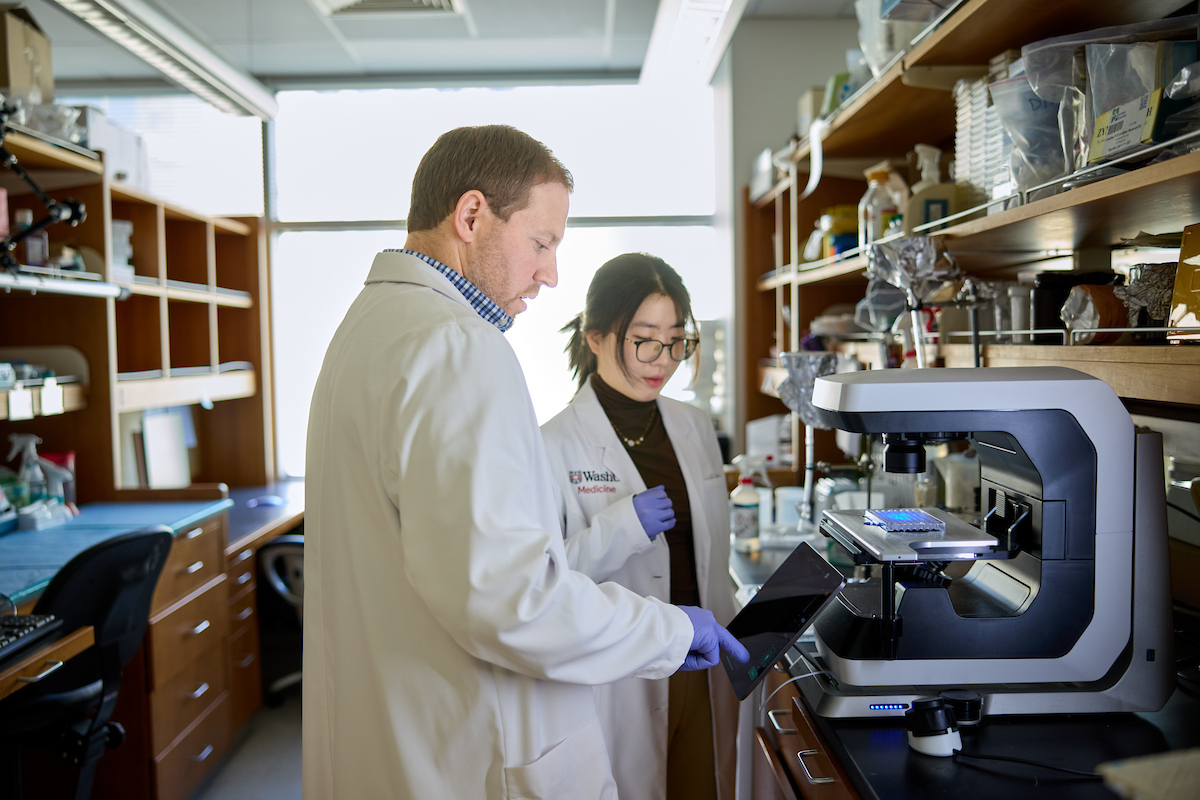
WashU announces new academic-industry collaboration with Bristol Myers Squibb (Links to an external site)
Multiyear program will provide hands-on training at the pharmaceutical company, fund translational neuroscience research at WashU.

Tool to predict brain swelling earns FDA Breakthrough Device designation (Links to an external site)
First device to identify dangerous stroke complication developed at WashU Medicine.
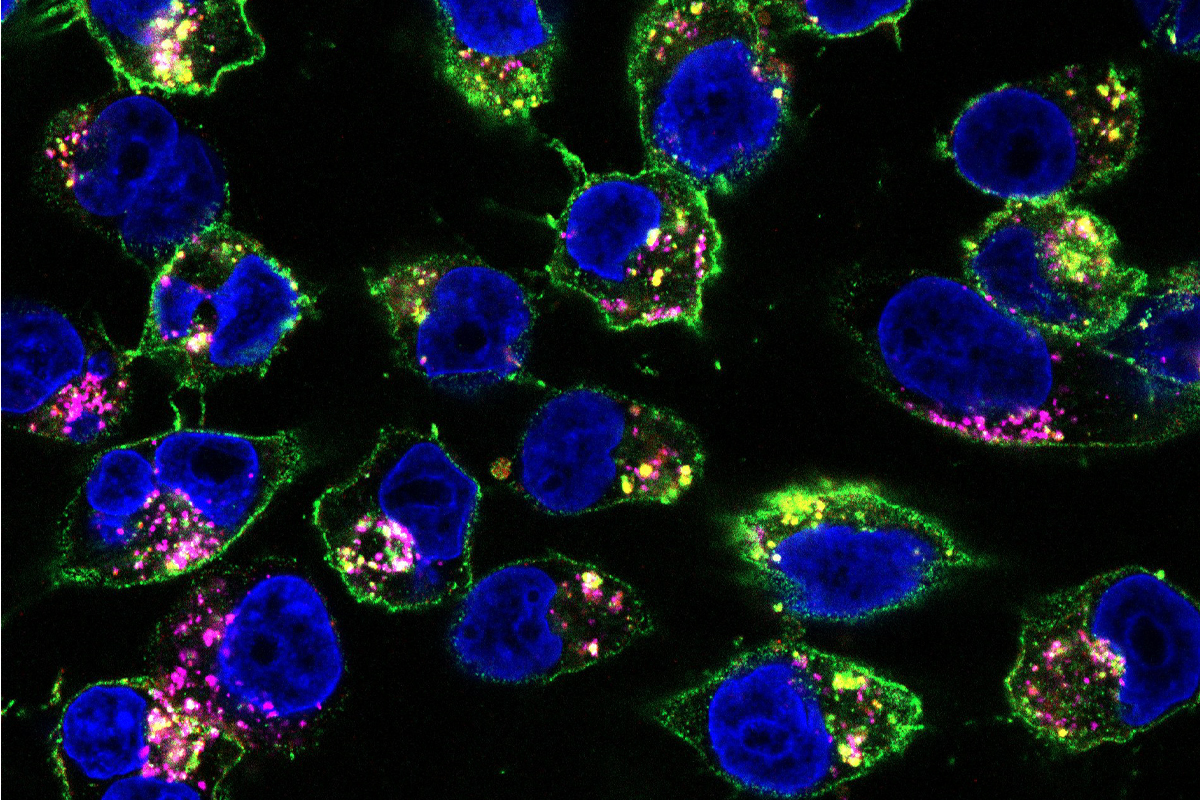
New approach to designing drugs supercharges cancer medication (Links to an external site)
Shape-shifting drug hits tumors in multiple ways, improves outcomes in mice.

Dementia rising across Latino populations, multidecade study finds (Links to an external site)
Cases climbed in Mexico, Peru and Puerto Rico over two decades, bucking a downward trend seen in many wealthy nations.

Global consortium launches AI tools to accelerate Alzheimer’s research, treatments (Links to an external site)
Founding members include WashU Medicine, pharmaceutical companies, philanthropic groups and others.
Research Wire
Brain activity varies with age in children with autistic traits
Carolyn Lasch, PhD, and Chad Sylvester, MD, PhD, find that children with more autistic traits favored a brain activity pattern tied to sight and movement before age 9 and one tied to social and emotional processing after 14.
Study reveals how ketamine interacts with opioid receptors
Tao Che, PhD, and colleagues at the Center for Clinical Pharmacology uncover new insights that help explain ketamine’s rapid benefits and its risks.
Breast cancers recruit bone cells to increase tumor growth
Orthopedics professor Roberta Faccio, PhD, and colleagues found that cells normally involved in bone formation play a role in supporting tumor growth.
Mammography use has dropped among some groups, study finds
Mammography screening rates, steady overall, have fallen among younger white women, uninsured women and current smokers, research led by Adetunji Toriola, MD, PhD, revealed.
Nasal spray vaccine protects against bird flu in mice
Researchers led by Jacco Boon, PhD, found that a novel H5N1 vaccine confers robust protection regardless of prior seasonal flu immunity.