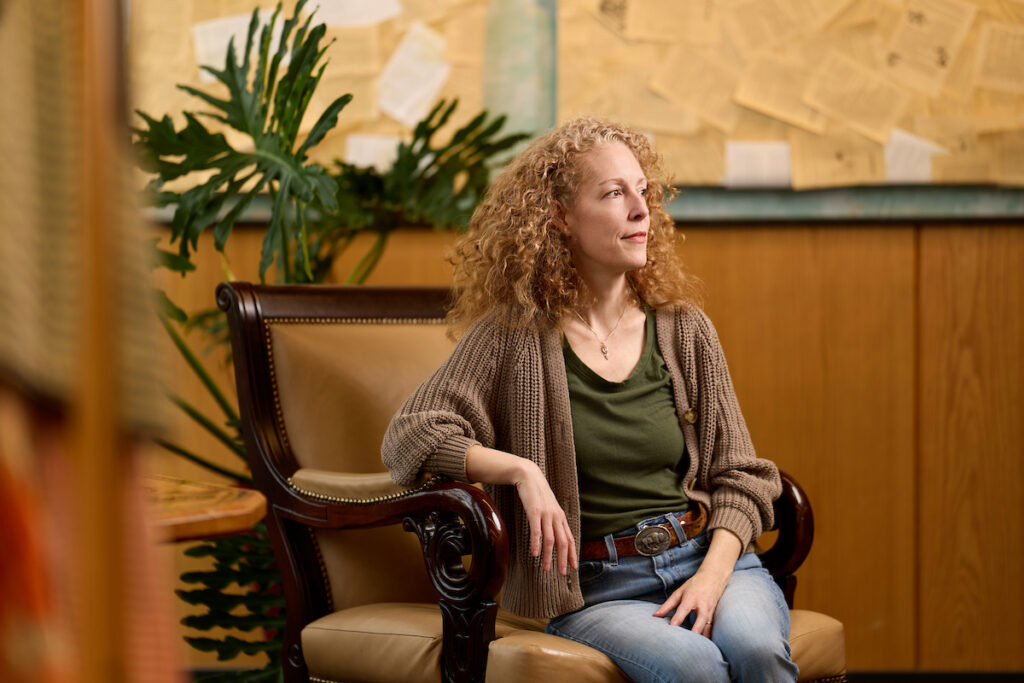
When Meghan and Mark Moore got married in 2021 at their home in suburban St. Louis, the group of close friends in attendance knew Meghan had been diagnosed with colon cancer just days earlier. Already, the tumor had spread to her liver, making her cancer stage 4 — an advanced diagnosis with limited treatment options.
Meghan’s doctors recommended palliative care and gently suggested she “get her affairs in order,” Mark recalled. Meghan was only 42.
“We didn’t tell our friends the tumor staging before the wedding because we didn’t want everyone crying the entire time,” Meghan said. “My sons — who were 13 and 20 at the time — have been a major reason I was determined to do everything possible to fight this.”
On average, about 15% of patients with stage 4 metastatic colorectal cancer survive five years after diagnosis. Mark said the doctors at a local hospital who made the original diagnosis estimated Meghan might survive 18 months based on the extensive spread of the tumor throughout her liver. After researching treatment options and fielding many recommendations from friends and family members, the couple sought a second opinion from WashU Medicine physicians at Siteman Cancer Center, based at Barnes-Jewish Hospital and WashU Medicine.
Siteman is the only National Cancer Institute (NCI)-designated comprehensive cancer center in Missouri and southern Illinois. Siteman is also among the few such centers to receive two consecutive “exceptional” ratings — the highest possible — from the NCI after complete reviews of Siteman’s programs, which must meet or exceed rigorous standards in patient care, clinical trials, cancer research, cancer prevention and community outreach.
About two weeks after Meghan’s diagnosis, she and Mark met with WashU Medicine oncologist Kian-Huat Lim, MD, PhD, a professor of medicine who treats patients at Siteman. He proposed a treatment plan that went beyond the standard care given for her advanced cancer.
“I recommended combining several chemotherapies to give Meghan a stronger regimen,” Lim said. “This was a relatively new strategy at the time, but she was young and otherwise healthy, so we felt we could start with an aggressive treatment plan. We have tremendous science and a multidisciplinary team with various expertise backing up our cancer care, so we can think outside the box while being guided by data and experience.”
After the strong chemotherapy regimen shrank the tumors, Meghan underwent a complex surgery at Barnes-Jewish Hospital to remove the main colorectal tumor and as many of the larger liver metastases as possible. The WashU Medicine surgeons who performed the surgery also implanted a hepatic arterial infusion pump, a device that administers high doses of chemotherapy directly to the liver. Such pumps are generally available only at large, specialized cancer centers and must be managed by an experienced team, including radiologists, who can assess accurate delivery of the chemotherapy; medical oncologists, who can decide on treatment dose and timing and manage side effects; and experienced nurses, who can access the pump securely and safely.
We’re a very aggressive program in liver transplantation for cancer. I think that’s part of why we see so many patients travel great distances to have those procedures here.
Maria B. Majella Doyle, MD
After more than another year of combined treatment using systemic and hepatic arterial pump chemotherapy, Meghan’s tumors had shrunk and were confined to her liver. But they had stopped responding to the chemotherapies and begun to creep up in size. As her options narrowed, Meghan’s treatment team began discussing the possibility of a liver transplant.
The WashU Medicine and Barnes-Jewish Transplant Center is one of the world’s most experienced in liver transplantation and among the few globally to perform liver transplants for a subset of patients with liver cancer, bile duct cancer or stage 4 colorectal cancer that has spread only to the liver and who meet strict eligibility criteria. This innovative approach to patient care is pushing the envelope of what’s possible in treating certain late-stage cancers, dramatically improving survival for eligible patients and raising the potential of a cure for some.
“We have taken care of cancer patients with a very short life expectancy and seen them return to a full life after liver transplantation,” said William C. Chapman, MD, the Eugene M. Bricker Professor of Surgery, director of the Division of General Surgery and chief of the Division of Transplant Surgery at WashU Medicine. “For many stage 4 colorectal cancer patients who meet the criteria for a liver transplant, it can dramatically extend survival and restore quality of life in ways that haven’t been possible until recently,” added Chapman, who treats patients at Siteman and Barnes-Jewish Hospital.
A close collaboration
For unknown reasons that are the subject of ongoing research, increasing numbers of people in their 30s and 40s are being diagnosed with colorectal cancer, often at advanced stages. Amid this trend, WashU Medicine physicians at Siteman are contributing critical innovations in cancer care to improve survival and quality of life for this growing population of patients.
In recent years, liver transplantation has emerged as a transformative treatment for carefully selected patients with stage 4 colorectal cancer whose tumors have spread exclusively to the liver. Although the procedure is being offered to more eligible patients at specialized transplant centers, it remains a relatively rare treatment option for metastatic colorectal cancer.
At Siteman, all patients’ cases are discussed at multidisciplinary tumor board meetings. For colorectal cancer patients with liver involvement, these meetings bring together WashU Medicine medical oncologists, radiation oncologists, surgical oncologists, GI specialists, liver specialists, interventional radiologists, radiologic imaging specialists, transplant surgeons and other cancer care experts to discuss the best treatment strategy for each patient, including which patients are eligible for liver transplantation. The patients are treated at Siteman first to shrink the tumors with chemotherapy and other treatment strategies, including novel therapeutic agents in clinical trials, hepatic arterial infusion pumps, liver-directed ablation or precision radiation, and surgery; and then receive their transplant evaluation at the WashU Medicine and Barnes-Jewish Transplant Center.
“I tell patients that the tumor board is like having not only a second opinion but a third and a fourth and a fifth opinion because everyone involved in their treatment has extensive expertise and is collectively deciding the best possible treatment strategy for their specific situation,” said Maria B. Majella Doyle, MD, the Mid-America Transplant/Department of Surgery Distinguished Chair of Abdominal Transplantation at WashU Medicine, who performed Meghan’s transplant.
“We’re a very aggressive program in liver transplantation for cancer,” added Doyle, who also treats patients at Siteman. “I think that’s part of why we see so many patients travel great distances to have those procedures here, including from the East and West Coasts.”
Kevin McClurg traveled from Frisco, Texas, to receive a liver transplant by WashU Medicine surgeons at Barnes-Jewish Hospital after he was diagnosed with stage 4 colorectal cancer in 2022 at age 42. He was treated for several years at the University of Texas-Southwestern Medical Center in Dallas and at Memorial Sloan Kettering Cancer Center in New York. But after McClurg’s liver suffered so much damage from cancer and treatment, they connected him with Chapman and Doyle to be evaluated for a liver transplant.
McClurg is now nine months post-transplant and four years post-diagnosis. He says he is feeling good, loving watching his 11-year-old daughter play soccer and ride horses. He is now doing well enough to embark on a new small business venture related to his daughter’s horseback riding — buying, selling and leasing show horses for riders who compete in equestrian events.
“I would never have considered starting this business if I wasn’t back to being active,” McClurg said. “I’m having a great time — back to my normal life.”
A rescued liver

Matt Miller/WashU Medicine
WashU Medicine transplant specialists are continuing to broaden access and innovate surgical procedures to improve outcomes for their patients. For instance, WashU Medicine surgeons performed the first fully robotic liver transplant in the U.S. at Barnes-Jewish Hospital in 2023. Robotic transplants may help speed recovery for patients after surgery because the procedures are minimally invasive.
Chapman, Doyle and their colleagues are also on the cutting edge of developing entirely new approaches to expanding access to liver transplantation, which, for Meghan Moore, made the procedure possible.
We have taken care of cancer patients with a very short life expectancy and seen them return to a full life after liver transplantation.
William C. Chapman, MD
After her tumors started growing despite ongoing chemotherapy, Meghan’s doctors added her to the national liver transplant waiting list. But because she was not at immediate risk of liver failure, she was far down on the list and unlikely to receive a donor liver.
In a stroke of fortunate timing, WashU Medicine investigators had just opened a clinical trial evaluating a device designed to increase the supply of donated livers available for transplant. Instead of preserving the organs on ice — the standard approach for decades — the device keeps donated livers at body temperature in a setting that mimics normal physiology, delivering oxygen and nutrients to help sustain the liver until transplant.
The strategy keeps the liver viable longer outside the body and can “rescue” livers that were declined by other transplant centers for various reasons, such as fatty liver disease, some of which can be addressed or treated during the liver’s time on the device.
“The technology gives you a second look at liver function and an opportunity to improve that function before the time of transplant,” Chapman said. “Sometimes an organ has features that make it hard to tell how well it functions, but this strategy is a way to be confident that a liver that has been declined for various reasons is actually going to work effectively.”
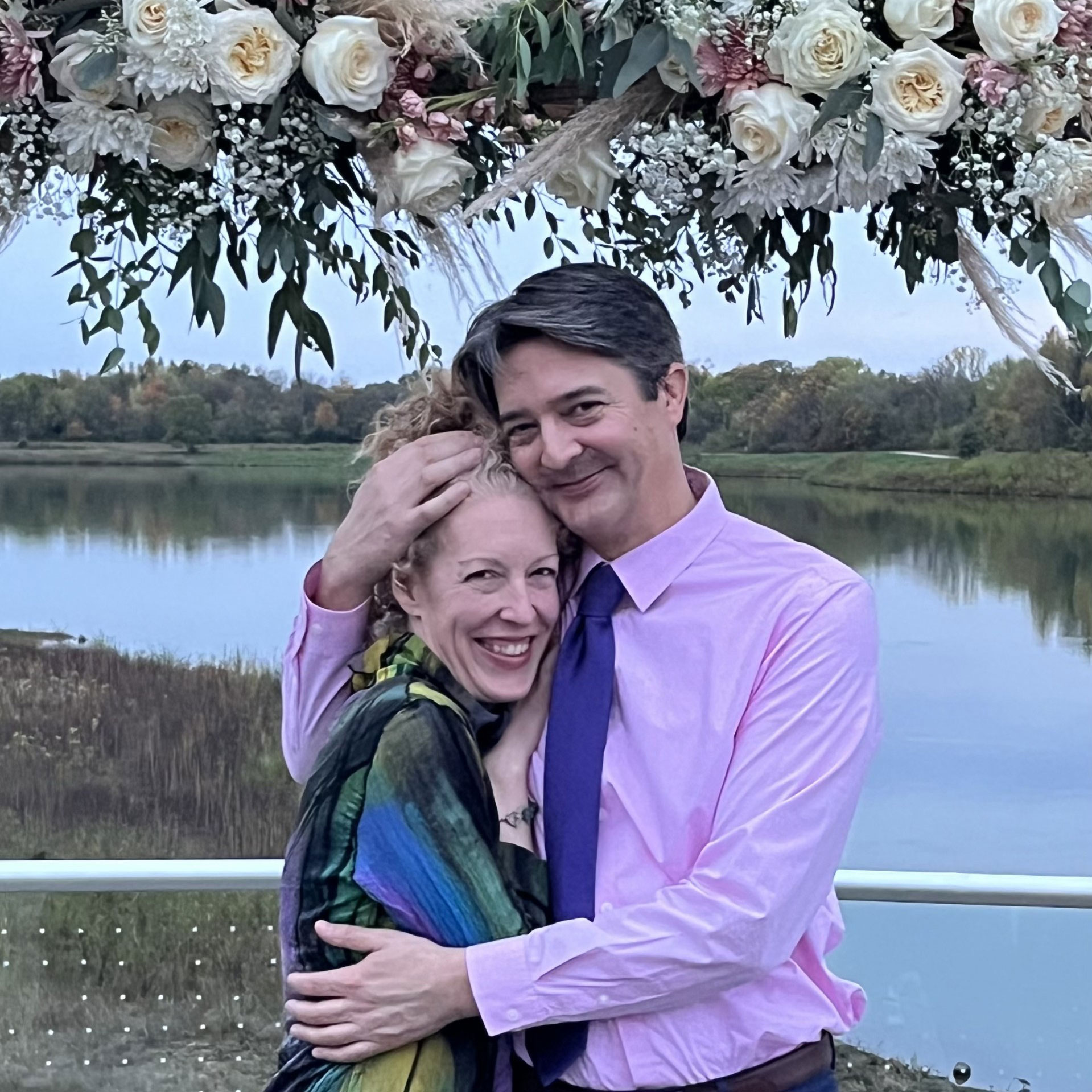
The clinical trial data are still being evaluated, but interim results published in 2023 by Chapman and his colleagues showed that 16 of 22 livers that would have been discarded were suitable for transplant — a nearly 73% rescue rate. That means 16 patients who were otherwise ineligible or destined to stay on the wait list received a donor liver, including Meghan. The trial was conducted at WashU Medicine, with the goal of expanding to additional sites in the future.
“I feel so lucky that this trial happened to be available at this exact time and place,” Meghan said. “At the time, I said that even if it didn’t work for me, I would at least contribute data that could help people in the future.”
Three years after her transplant and almost five years after her diagnosis, Meghan is doing well. Her scans show no evidence of cancer and her bloodwork remains normal. Meghan and her family recently celebrated a milestone they once feared she might not live to see: In May, she watched her younger son walk across the stage to receive his high school diploma.