Vitaly Klyachko, PhD, in Cell Biology & Physiology has shown that brain cells called astrocytes modulate cholesterol in the brain to facilitate communication between neurons.
Brain cells regulate cholesterol to control neuron signaling
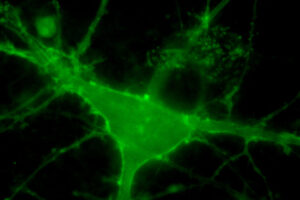
Vitaly Klyachko, PhD, in Cell Biology & Physiology has shown that brain cells called astrocytes modulate cholesterol in the brain to facilitate communication between neurons.
Aaron Y. Lee, MD, Cecilia S. Lee, MD, and collaborators earned first place and a $400,000 prize in the Data Sharing Index Challenge sponsored by the NIH.
Stephen Oh, MD, PhD, and colleagues have identified a potential approach to treat a group of blood cancers known as myeloproliferative neoplasms by taming inflammation.
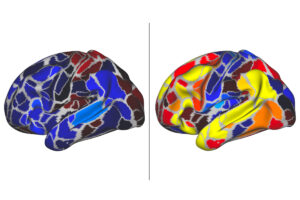
Carolyn Lasch, PhD, and Chad Sylvester, MD, PhD, find that children with more autistic traits favored a brain activity pattern tied to sight and movement before age 9 and one tied to social and emotional processing after 14.
Tao Che, PhD, and colleagues at the Center for Clinical Pharmacology uncover new insights that help explain ketamine’s rapid benefits and its risks.
Orthopedics professor Roberta Faccio, PhD, and colleagues found that cells normally involved in bone formation play a role in supporting tumor growth.
Mammography screening rates, steady overall, have fallen among younger white women, uninsured women and current smokers, research led by Adetunji Toriola, MD, PhD, revealed.

Researchers led by Jacco Boon, PhD, found that a novel H5N1 vaccine confers robust protection regardless of prior seasonal flu immunity.
A research team led by Michael E. Belloy, PhD, identified key genetic targets for potential Alzheimer’s disease therapeutics development.
Nathan Stitziel, MD, PhD, has been awarded $1.9 million from the Leducq Foundation to help identify new therapeutic targets for cardiovascular disease and improving prevention.