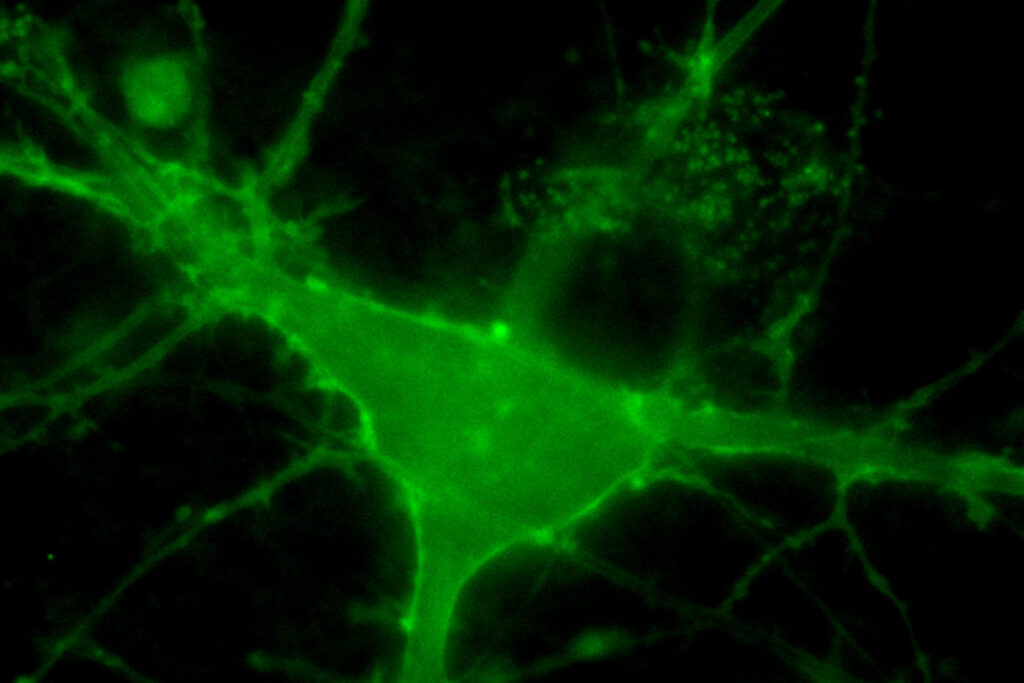
Cholesterol, a fat-like substance in the body best known for its role in cardiovascular health, also plays a key role in how neurons — foundational cells for the brain’s ability to process and integrate information — communicate with one another. Now, research led by Vitaly A. Klyachko, PhD, a professor in the WashU Medicine Department of Cell Biology & Physiology, has shown that brain cells called astrocytes regulate cholesterol supply to modulate neuronal communications.
The study was published Aug. 4 in the Journal of Cell Biology.
Neurons produce some cholesterol on their own, but not enough to meet their own needs. Astrocytes — non-neuronal brain cells that support neuron development and help maintain the connections between neurons, called synapses — also produce and release cholesterol.
By inhibiting the ability of astrocytes to release cholesterol, Klyachko’s team found that the strength of communication between neurons was reduced. Using ultra high-resolution microscopy that allows them to peer inside the individual neuronal connections and record their activity, they found that when astrocyte cholesterol supply was reduced, the synaptic connections altered the electrochemical signals they use to communicate, leading to less reliable signaling between them.
Klyachko’s lab also showed that the amount of cholesterol released by astrocytes was linked to activity at the synapse: The fatty material was produced in greater amounts when neuronal communication was occurring at a higher rate. This suggests that astrocyte cholesterol release plays an active role that facilitates synaptic communication.
Abnormal cholesterol levels in the brain are a feature of many neurological diseases such as Alzheimer’s and autism, and the study suggests that astrocytes might play a larger-than-suspected role in those conditions.