Individuals with HIV show signs of faster biological aging compared with people without HIV. In other words, indicators of bodily functions that can be measured in the blood appear more like that of an older individual than of someone the same age.
Some studies have suggested that getting the virus under control can restore those indicators to age-appropriate levels, but researchers at WashU Medicine found in a new study that age biomarkers of people with HIV whose infection is well controlled by medication still appear older, suggesting that treatment doesn’t fully close the aging gap. These blood-based measures also corresponded with signs of brain aging on MRI scans and with performance on some tests of brain function.
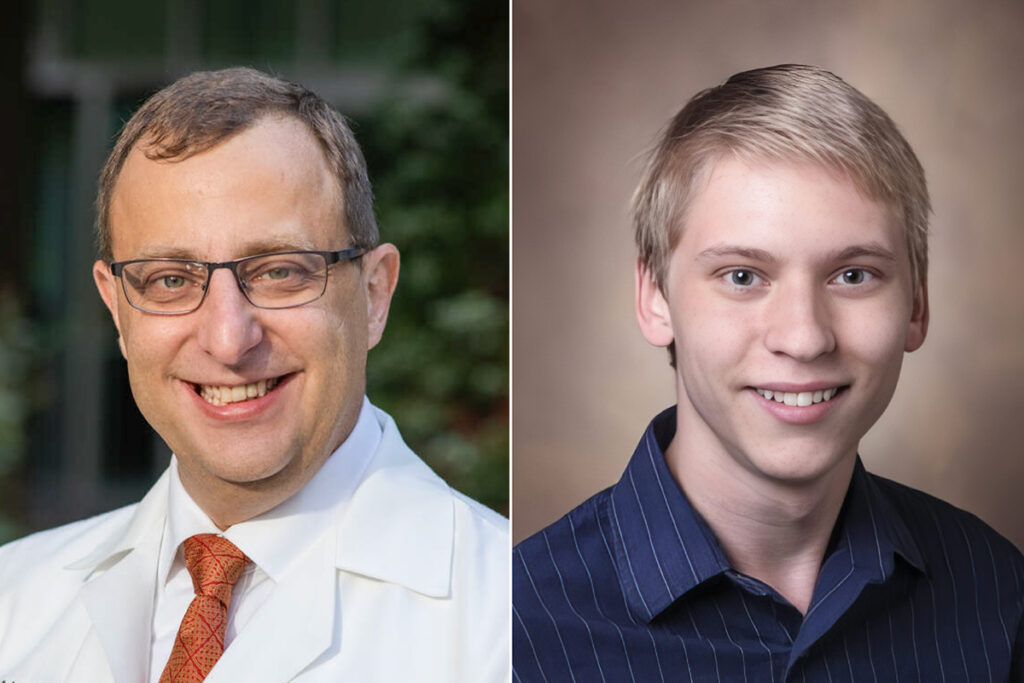
The study, led by first author Kalen Petersen, PhD, an assistant professor of neurology, and senior author Beau Ances, MD, PhD, the Melba and Forest Seay Professor of Clinical Neuropharmacology, examined whether advanced measures of biological aging align with brain aging and evaluated how HIV-driven aging relates to social and behavioral health factors. The team analyzed blood samples, brain scans and cognitive tests from 126 people with HIV whose virus was suppressed by antiretroviral therapy and 145 people without HIV.
The study was published online September 24 in the journal eBioMedicine.
Compared with people without HIV, people with HIV were about two years older biologically and aging about 5% faster, even after accounting for age, sex, race and other factors. Across all participants, higher scores on blood-derived GrimAge — a clock designed to predict risk of death — corresponded with older-looking brains. Among people with HIV, living in a more economically disadvantaged neighborhood was linked to higher GrimAge, while more years of education associated with lower GrimAge. Higher cardiovascular risk was tied to higher GrimAge across all participants.
Because the study captured a single point in time, it can’t show cause and effect, but the findings suggest that even when HIV is under control, people with HIV still show signs of faster aging. Additionally, aging is shaped in part by other modifiable factors, such as heart health and social conditions, which are often worse among people with HIV.