
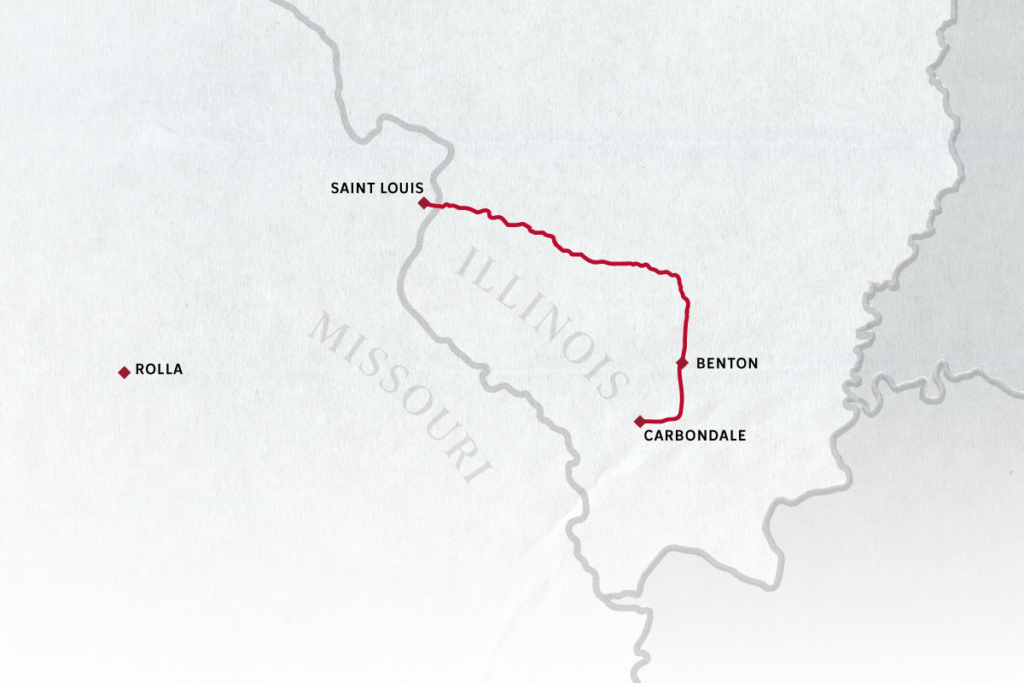
The drive from rural Benton, Ill., to St. Louis takes two hours, but for Jennie and Jake Gibbs, the hardest part wasn’t the distance, it was the uncertainty.
Last summer, Jennie was 24 weeks pregnant with identical twin boys facing a life-threatening condition when she traveled to Barnes-Jewish Hospital, where WashU Medicine obstetricians who manage high-risk pregnancies would perform a delicate fetal surgery that could determine whether both babies survived.
“We didn’t know if we would be bringing babies home at the end of this pregnancy,” Jennie recalled. “We were in a dark place in our lives.”
The twins shared a placenta, and abnormal interconnecting blood vessels were sending too much blood to one baby and too little to the other — a dangerous complication that can be fatal without treatment.
WashU Medicine maternal-fetal medicine specialists at the Fetal Care Center — a collaboration among Barnes-Jewish Hospital, St. Louis Children’s Hospital and WashU Medicine — are among the few in the country with the expertise to perform fetal surgery. They had recommended the procedure to seal the connecting vessels and restore balance to the twins’ circulation.
The four-hour surgery was successful, and after a brief hospital stay, the Gibbses returned home to their three other children, all under the age of six. Jennie even went back to work teaching high school math and science. For the remainder of her high-risk pregnancy, she received most of her care close to home through a new collaboration between her local Carbondale, Ill., obstetrics team and WashU Medicine specialists.
Of the 32 prenatal visits in her 36-week pregnancy, Jennie and her husband Jake made the 100-mile trip to St. Louis only four times before delivery.
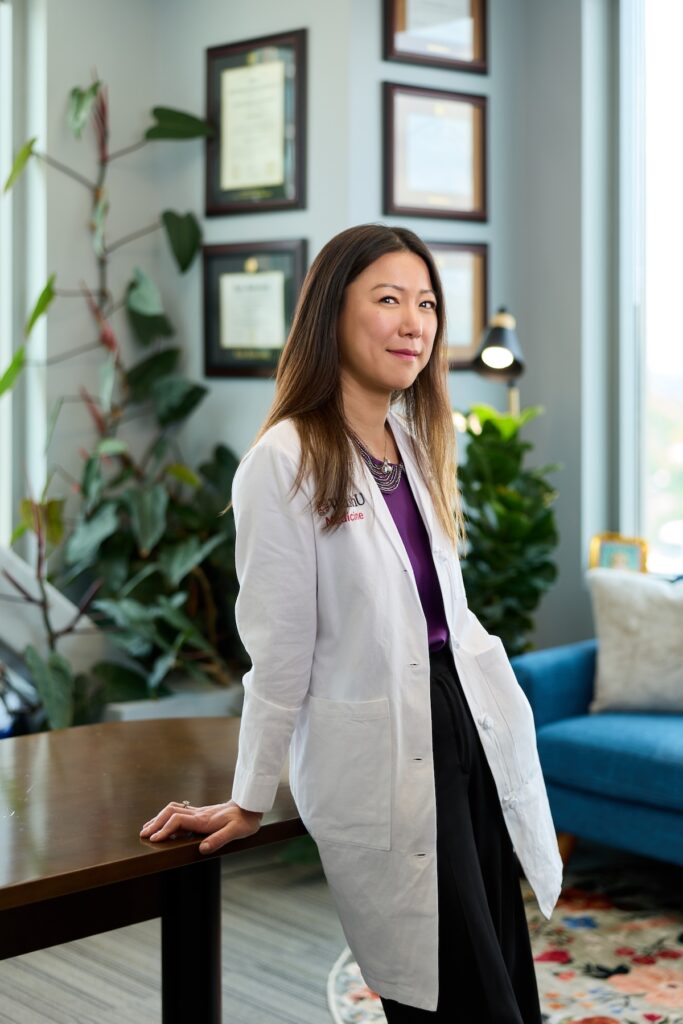
Jeannie Kelly, MD, helped develop an innovative approach that enables patients in rural areas to see their local obstetric providers in person and WashU Medicine specialists remotely. (Photo by Matt Miller/WashU Medicine)
Jennie’s experience reflects a shift in pregnancy care thanks to a telemedicine program developed by WashU Medicine. Since its inception in 2023, the program has supported more than 2,500 high-risk pregnancies in the Carbondale area, closer to the Gibbses’ home, and is part of a broader effort to expand access to specialized prenatal care in rural communities.
The program enables patients to see their local obstetric providers in person and WashU Medicine maternal-fetal medicine specialists remotely via video calls. In high-risk pregnancies, these specialists help guide treatment decisions and coordinate care with local physicians. When patients need to be transferred to Barnes-Jewish Hospital, they arrive with the familiarity of an existing relationship with the care team.
Jeannie Kelly, MD, an associate professor of obstetrics and gynecology, and Jeffrey M. Dicke, MD, a professor of obstetrics and gynecology, helped develop the innovative approach. The model, the only of its kind in the Midwest, emerged from the implementation and expansion of telehealth during the pandemic.
“The benefits of this care model for patients living in rural areas are enormous,” said Kelly, also the director of the Division of Maternal-Fetal Medicine & Ultrasound. “They stay with the local physicians they know and trust, while gaining access to highly specialized care that often is not available close by.”
Meeting patients where they are
Women in rural areas with high-risk pregnancies often must travel long distances to access maternal-fetal medicine specialists, who are concentrated in urban areas. The collaboration between rural doctors and WashU Medicine physicians aims to reduce those barriers, easing the burden of care by shortening the time and travel required for specialty visits. It cuts down on repeated long-distance trips, gas and lodging costs, and time away from work and family, while blending local providers’ deep community knowledge with WashU Medicine’s subspecialty expertise.
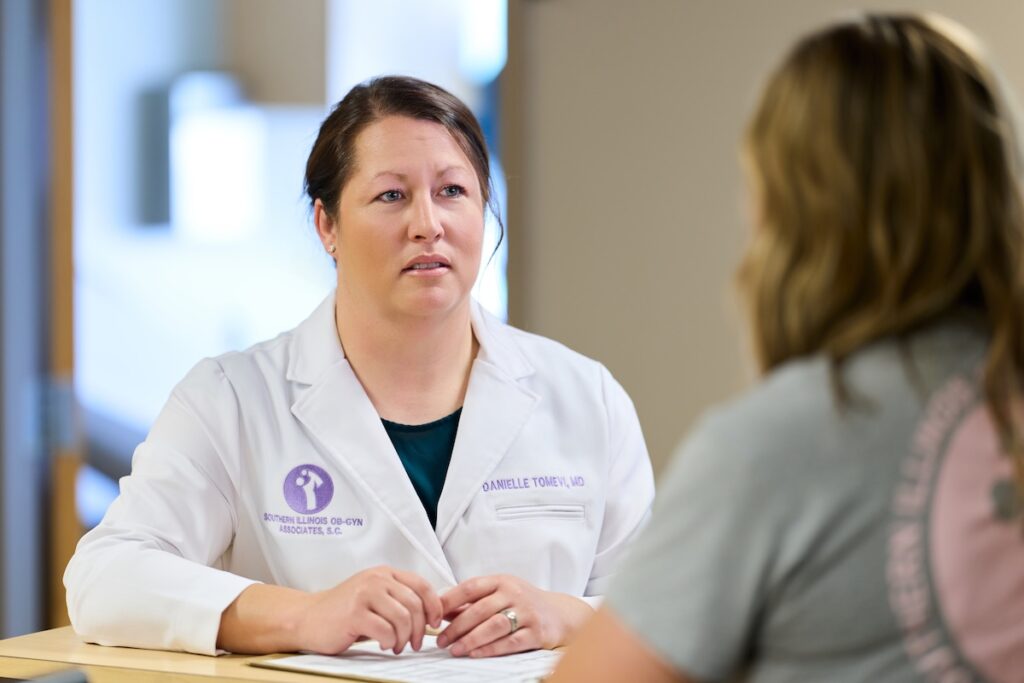
“Co-managing patients with WashU Medicine shows that care can be delivered in different ways in rural areas,” said Danielle Tomevi, MD, an obstetrician-gynecologist in private practice in Carbondale who was part of the obstetrics team that cared for Jennie. “It brings together the strengths of academic medicine and community care to treat the whole patient — fully aware of who they are, where they live and what they need.”
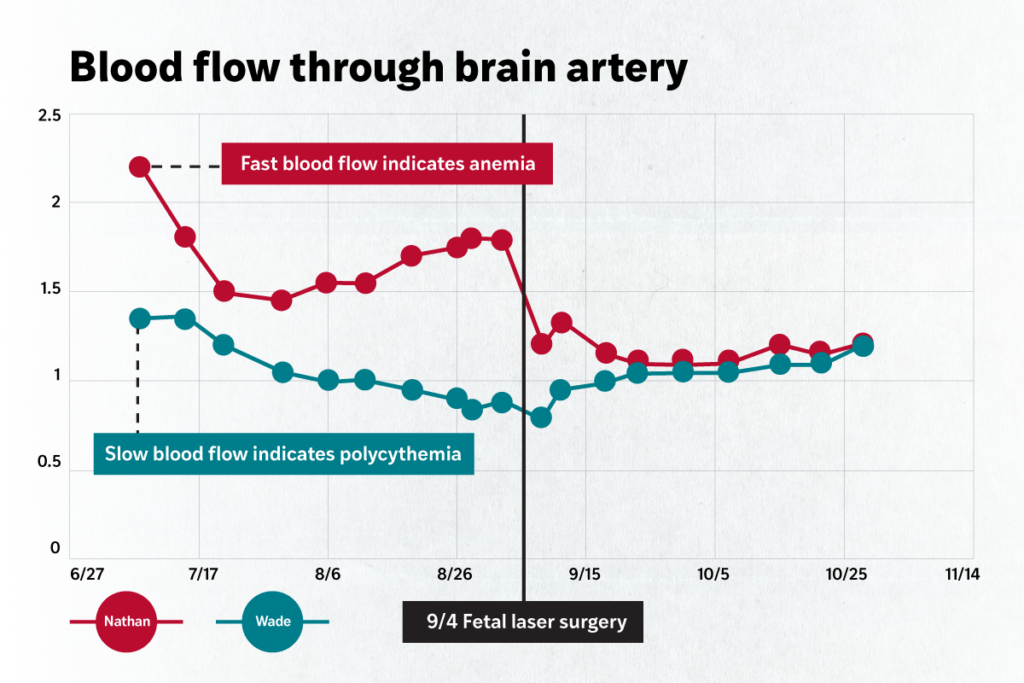
For Jennie, that collaboration became critical when her pregnancy took a dangerous turn at 15 weeks. The tiny, connected vessels in her placenta slowly shunted blood from one baby to the other, leaving one baby anemic and making the other baby’s blood abnormally thick. Both babies were at risk for heart failure and death.
Her twins’ condition — known as twin anemia polycythemia sequence — was detected in an ultrasound performed by highly trained sonographers, who act as the “eyes” into the pregnancy. Over the following months, Jennie had 24 ultrasounds to monitor the babies’ blood flow and watch for signs that the condition was worsening.
Most of those scans were performed at the WashU Medicine practice in Carbondale, close to her local obstetrician’s office. Two sonographers — who are based in Carbondale and underwent a year-long intensive training with WashU Medicine — captured the specialized views and detailed images. WashU Medicine specialists then reviewed the scans the same day via telehealth.
“Because we have a strong combination of highly trained sonographers in rural practices, state-of-the-art equipment at our Carbondale site and technology that lets our specialists read ultrasounds remotely, we’re catching problems that might otherwise be missed,” said Katherine H. Bligard, MD, an assistant professor of obstetrics and gynecology who diagnosed the twins’ condition.
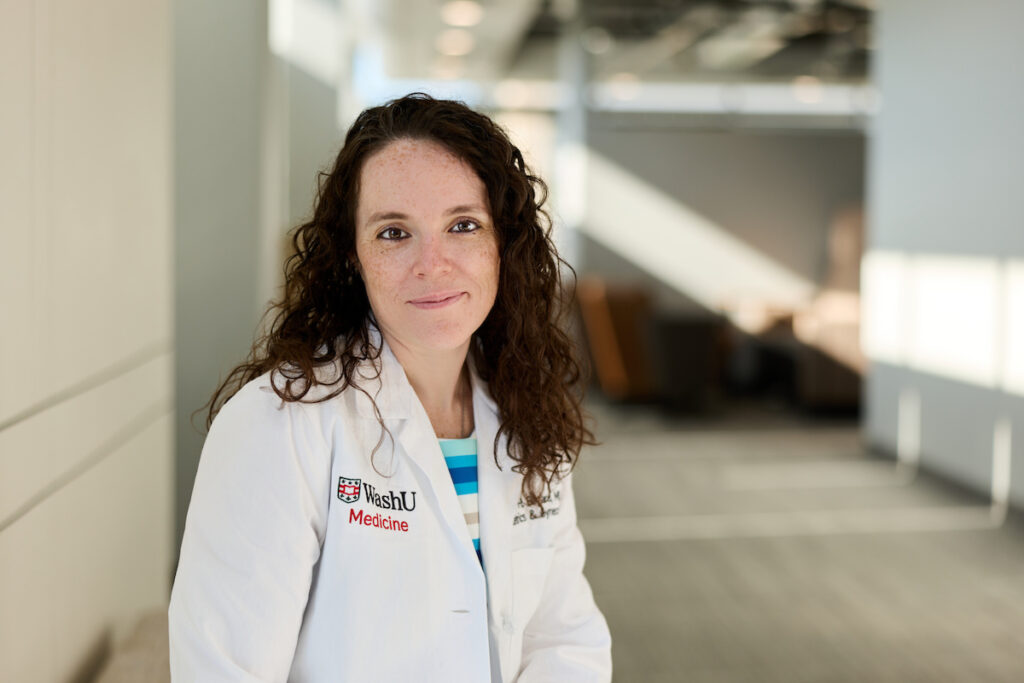
“Earlier diagnosis can make a real difference in outcomes for moms and babies,” added Bligard, who also led the multidisciplinary team that performed Jennie’s surgery.
In Rolla, Mo., WashU Medicine physicians have also helped train sonographers at Phelps Health Hospital. Since 2025, WashU Medicine maternal-fetal medicine specialists have read roughly 4,500 ultrasounds performed at Phelps Health. They collaborate with Wesley Harden, MD, an obstetrician-gynecologist, and other local physicians and certified nurse midwives who see patients and deliver babies at Phelps Health.
“General obstetrics is not as simple as it used to be, with rising rates of obesity, diabetes, substance abuse and other conditions that complicate pregnancy,” said Harden, whose patients sometimes drive over an hour and a half to see him. “WashU Medicine physicians bring specialized expertise into our communities, reducing the need for families to travel long distances and providing another layer of support for rural doctors who already manage a lot of complexities in pregnancy.”
Complex surgery in the womb
When it came time for the twins’ surgery, Jennie remained awake during the procedure and watched it on a monitor brought into the operating room just for her. After making a small incision in her abdomen, surgeons threaded a tiny camera near the placenta and then guided a laser to the placenta, where they sealed the blood vessels connecting the twins.
The procedure carries serious risks, including preterm labor and possible loss of one or both babies.
“We are forever grateful for our care teams and for the support from our community at home. They carried us through difficult decisions and moments no parent should have to face.”
Jennie Gibbs
In the operating room, Bligard, the fetal surgeon, worked side by side with other fetal-medicine specialists, anesthesiologists, neonatologists, nurses and other specialists. The team at the Fetal Care Center is among the few in the country to perform complex fetal surgeries and interventions for rare fetal conditions and sees about 500 patients annually. Bligard is the center’s associate director.
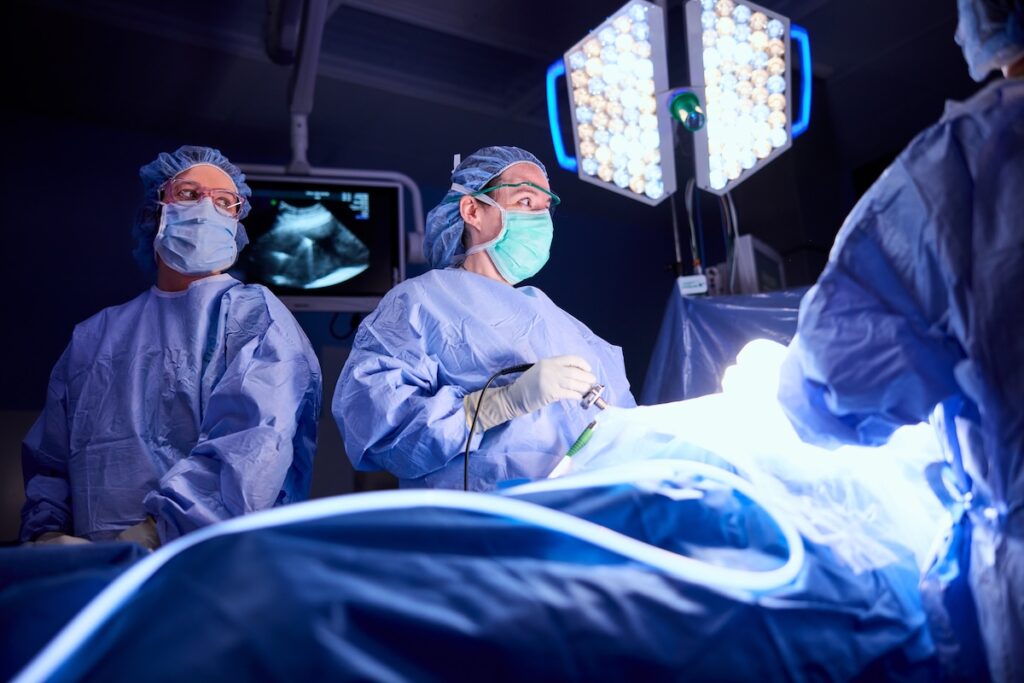
WashU Medicine’s Katherine Bligard, MD, is among an elite group in the country offering advanced surgical procedures and interventions for rare fetal conditions. (Photo by Matt Miller/WashU Medicine)
Jennie’s physicians closely tracked the twins’ blood-flow measurements recorded during her frequent ultrasounds. Jennie, who had been plotting the numbers on a graph since the diagnosis, saw the lines clearly move toward normal within a week after the surgery.
“It was the most amazing feeling,” said Jennie. “We are forever grateful for our care teams and for the support from our community at home. They carried us through difficult decisions and moments no parent should have to face. When the boys are old enough, we want to tell them how loved they were before they ever took their first breath.”
Telemedicine for the delivery room
As the telemedicine model expands to more sites in Missouri and Illinois, Kelly envisions a future in which more patients could safely deliver at hospitals closer to home, supported by WashU Medicine specialists connected virtually to local labor and delivery teams and making real-time decisions together to ensure the best outcomes. Currently, Barnes-Jewish Hospital manages transfers from outlying areas for about 500 high-risk pregnancies annually, which represent roughly 15% of the hospital’s 3,500 deliveries. Some of them may be suitable for local deliveries with the support of telemedicine.

“Traveling far from home to give birth can place an emotional and financial strain on families,” Kelly said. “Telemedicine gives us an opportunity to support hospitals in rural areas, working with local teams to keep more patients close to home on one of the most challenging — and joyous — days of their lives.”
When the time came for the twins’ delivery, Jennie and Jake made their fifth and final drive to St. Louis. This time, there were fewer unknowns. Instead of fear, the drive was filled with anticipation. Bligard delivered the healthy twin boys — Nathan and Wade — marking a joyous end to a pregnancy once filled with uncertainty.